The City of Las Vegas and the surrounding Las Vegas valley has seen tremendous growth over the last decades. Since 1990, the population has doubled. All indications assure that this trend will continue. This growth provides a thriving community for many, as pointed out in the May 2005 issue of Architectural Record:
Las Vegas found an economic-success formula that eludes so many other places: high growth combined with low costs. It’s been affordable to all but the lowest-paid service workers—and many of them are far better paid than they are elsewhere because Las Vegas is one of the most unionized cities in the country. Low taxes and hands-off regulators make it easy to start a business here, and easy for those businesses to expand. Rapid population growth (around 100,000 per year) adds new customers and new opportunities every day. - May 2005 issue of Architectural Record
The rapid growth has also presented a small-town city with some big-town problems. Many of these issues go unseen or passed off as temporary, but as the growth continues, the problems worsen.
"If you want a bus to work, forget about it, but if you want a limo or cab to a casino no problem," says Marianetti. "Everything is geared toward the hotels and tourists but when it comes to the people who actually live here, they come last." http://www.usatoday.com/travel/destinations/2005-04-27-vegas_x.htm
During the 2003 Nevada legislative session, in the midst of a deadlock over raising taxes in the no-income-tax state, it became known to residents that the education budget was knit in with the general state budget. The deadlock held funding from one of the fastest growing and the fifth largest school district in the country, until some last minute Nevada Supreme Court decisions and legislative petitions and initiatives resolved to fund "Education First." Had that been allowed to happen, there was fear of schools not being allowed to open and teachers and staff not being paid.
GOAL: OWNERSHIP
Because of the Hotel/Tourism-based economy, the tremendous growth in the Las Vegas Valley, and a small share of residents being native to the valley, local ownership of the community is based off of how they perceived ownership of their previous city. "Home" for most residents in Las Vegas is somewhere else. The sense of ownership in Las Vegas lies in providing for the now 22% economic basis, the Casino Industry. There are plans underway to redevelop an unused former railroad property near downtown Las Vegas. Redevelopment of the Union Pacific Railroad site as a mixed-use development with residential being provided for locals vs. the result of "Manhattanization" with luxury high-rise towers built and sold to time-share holders, investors, and vacation-seekers. How can retail, business, coffee shops, boutiques cater to the local residents vs. the tourists? The residential aspect is a much-needed aspect in the revitalization of the downtown corridor.
A good example of a successful mixed-use development in the Las Vegas Valley is "The District," located in a high-end area of the valley (http://www.thedistrictatgvr.com/). While this example of a successful mixed-use development proves that residential and commercial uses blend well with and depend on each other for success, one key component is vacant. Constant night life from shops, restaurants and people walking the streets on their way home provide a great "place" to be and will continue to draw people to this development for many years to come. However, as mentioned earlier, there is still a key component missing: location. Although The District is nestled close to a major casino and has connectivity (both pedestrian and vehicular) to thriving surrounding neighborhoods, it is far from being central to the Las Vegas Valley. In contrast, though downtown Las Vegas is littered with casinos, there is a general lack of local citizens. The aspect which makes The District a success where it is located is PEOPLE. Without the human component, this site would be no different than what is going currently in downtown Las Vegas. The site is successful due to the presence of people, location, and need for shopping in that area.
Happening now in downtown Las Vegas is the opposite of what was created in The District. There will be residential, commercial, and business in these "beautiful" towers in planning and those currently under construction. However, what is happening is the downtown area may not be as a result of consideration of the residents of Las Vegas. All sorts of studies must be generated for final approval, including traffic impact studies, drainage studies, and impact of development to the schools, parks, churches, utilities. There are financial issues that have to be dealt with before high-rise mixed-use developments can be approved. The one leading factor that is left out in the planning and approval process is PEOPLE. Who will use and live in these towers? There is no hard data used in determining who will buy and ultimately take ownership of these high-rise communities. Yes, during the financial scope that has to be presented, staggering numbers are given that this type of development will succeed. Those numbers are primarily based on unit sales. On the surface, these numbers seem good and reliable, but one can question who is really going to live there. The target demographic seems to have been real estate investors, wealthy vacation home buyers, and famous people, most of whom live outside of Las Vegas. This demographic is not representative of the residents of Las Vegas. Generally, Las Vegans are, like most everywhere else, middle-age, working class families of 3-5. The developers are worthy of applause in moving forward with the right and abilities to develop such properties. However, the true everyday occupancy rate for these towers could potentially be quite low. These towers, on their own, will not help develop and rejuvenate downtown Las Vegas; it will only build upon what currently exists: a shell of a downtown that is supported and lived in by the tourist.
For these residential towers to be successful within the community there must first be a downtown to support the "families" that live in the towers. It would follow like this:
Growing businesses, + local amenities (shopping, entertainment), + people
= A successful downtown
The importance of this equation lies not in the variables, but in the order. A budding downtown business district, which provides the need for local amenities, which will draw people to it, will provide a successful downtown.
In contrast to this, Henderson, a growing city as well, has seen some of these mistakes and has developed a plan that addresses these concerns. As experienced in The District and other smaller developments, Henderson has set out to develop (and they did) shopping and business nodes, low-rise condos and apartments, and residential on a single-family scale. This development strategy has been carried over to the Henderson "downtown strip."
Nearly half a century ago during a visit to Southern Nevada, President John F. Kennedy predicted that the then fledgling City of Henderson was a "city of destiny." Little could he have known just how accurate a prediction he was making.
Henderson was actually "born in America's defense" ten years prior to its incorporation during World War II with the building of the Basic Magnesium Plant. The plant supplied the US War Department with magnesium for munitions and airplane parts.
However, in 1947, magnesium production was no longer necessary for defense and most of the 14,000 BMI employees moved away. Enrollment in the school system was reduced by two thirds and well over half the townsite houses, built to house plant workers, went vacant. In 1947 the United States War Asset Administration actually offered Henderson for sale as war surplus property. In an effort to save the city, the Nevada Legislature spent a weekend visiting Henderson evaluating the possibility of state administration of Basic Magnesium. Within days of the visit, the legislators unanimously approved a bill giving the Colorado River Commission of Nevada the authority to purchase the industrial plants. Governor Vail Pittman signed the Bill on March 27, 1947, helping save Henderson from becoming war surplus property.
With the help of local industry, the City of Henderson, Nevada, was officially incorporated on April 16, 1953. On May 23, 1953, Henderson, with its population of 7,410, elected Dr. Jim French as the town’s first Mayor. Originally about 13 square miles in size, the City quickly began to grow and flourish. Today, the City of Henderson has grown to more than 94.5 square miles and is the second largest city in Nevada. Henderson is often referred to as having small town values with big city efficiencies. The city's official slogan "Henderson—a Place to Call Home" reflects a community that enjoys small town values while benefiting from big city efficiencies.
http://www.cityofhenderson.com/mayor/php/history.php
I mention the history of Henderson for two reasons:
1. Not many people outside the Las Vegas Valley know that Henderson is their own city.
2. Like Las Vegas, there is a downtown, although Henderson’s downtown is strikingly different than that of Las Vegas.
Downtown Henderson is not a littered with casinos, it is not complied of multiple large buildings, yet their vision is the same: bring people back into downtown. Henderson’s downtown is one street with small 30-foot section streets connecting the 1940's magnesium plant housing. The only anchor is the City Hall on the South end of the road. On the other end of the road, Water Street provides a normal corner that feeds into Lake Mead Highway. On one side is a small motel and the other a gas station. However, located in between is a series of small shops (mainly single story, with an occasional two-story building from the 1950's).
Recently, the Henderson Redevelopment Agency has developed a plan to build up their downtown.
Downtown: Projects totaling more than 230,000 square feet and including retail, residential and office components in Downtown Henderson began construction in 2005. These projects are located along Water Street, the cultural heart of the city and feature galleries, murals, artisan and craft boutiques, restaurants, and a new Henderson Events Plaza."
Downtown Henderson will be undergoing many changes in the very near future. Construction is complete for upgrading the utilities in Water Street, and Phase II of the construction to expand the sidewalk, and make the pedestrian areas more beautiful and inviting is underway. Standards have been adopted to require ground floor retail storefronts in multi-story, mixed-use buildings to allow for a diverse, exciting Downtown experience.
In 2003, the Redevelopment Agency adopted the Downtown Investment Strategy (DIS) to guide the development of Downtown Henderson. The DIS identifies target niche business types in which recruitment efforts are focused. Those niches are Specialty Retail, Convenience Retail, Arts & Culture, and Market-Rate Housing.
The Agency provides development incentives in the form of grants, low-interest loans, take-out financing, and more. Two programs have proven very successful in assisting new and existing businesses to thrive: the Facade Improvement Program (no longer available) "and the Revolving Loan Fund. These programs have provided financial assistance to business and property owners for improvements, start-up capital, equipment and the like. The Agency also administers the Homeowner Assistance Program, which provides grants and low-interest loans to residents living within the Downtown Henderson Redevelopment Area.
There are many unique and original shops and restaurants, as well as owner-operated service businesses located in the Water Street District of Downtown Henderson. The Redevelopment Agency helps to recruit additional target businesses to the area. The fun and vibrant Downtown is home to a gold caster who designs custom jewelry, several fine art galleries, artisan and craft boutiques, and
a wonderfully cozy used-book store. In addition, there is a custom embroidery store, several beauty salons, one-of-a-kind restaurants, real estate brokerages, banks, florists, local casinos, and much more! Each store is operated by the owner and provides the ultimate in specialized customer service.
The Water Street District is also home to many Agency- and City-sponsored events, including ArtFest, the Springsational Heritage Parade, Concerts in the Park, Super Run Car Show, Water Street District Celebration of the Arts, Henderson's Terrible 300 Off-road Race Tech and Contingency Event, and the Children's Christmas Parade. In addition to these events, the Downtown Henderson Business Association also sponsors Third Thursdays, which is an art-walk that is held the third Thursday of every month in the Water Street District of Downtown
Henderson, and a weekly farmers market. Country Fresh Farmers Market recently moved to the Henderson Events Plaza in front of City Hall. Farmers Market is held every Thursday from 11 a.m. until 6 p.m. and features farm-fresh produce, plants, flowers, and unique gifts and food
http://www.cityofhenderson.com/property/redevelopment/php/redevelopment.php
It started simple and slow: find developers and partner with them to develop commerce. This is a key point, one that Henderson didn’t back down on. Riding on the backbone of their concept to develop places where day-long activities could and would take place, building started to emerge from the shambles of the few vacant lots. These vacant lots are now restaurants, art galleries, business offices, coffee shops and book stores. Yes, they are multi-story, but on a small scale. The city hosts block parties, craft fairs, car shows, etc., and on any given weekend, something is going on. These changes took time, and that was okay with them. They found developers that wanted to enhance their downtown area in the fashion that the city set out. While these new developments were in planning and construction, the City started a working on improving the pedestrian scale of the street. The ‘Water Street Project’ is a three-phase plan to revitalize the area:
Phase 1 improvements included:
1. Removal of existing sidewalk, curb, gutter, medians and asphalt on Water Street between Atlantic Avenue and Basic Road
2. New curb, gutter and asphalt on Water Street between Atlantic Avenue and Basic Road
3. A new storm drain in Atlantic Avenue from Lead Street to Boulder Highway, and in Basic Road from Water Street to Boulder Highway
4. Sanitary sewer in Basic Road from Water Street to Boulder Highway # Water distribution upgrades in the intersection of Water Street and Atlantic Avenue, and Water Street and Basic Road # Conduit in Basic Road from Water Street to Boulder Highway
Phase II improvements included:
Revised landscaping and street lighting
New sidewalk, curb, gutter, and asphalt on Water Street between Ocean Avenue and Pacific Avenue
Water distribution upgrades in the intersection of Water Street and Pacific Avenue
Re-pavement of Lead Street between Basic Road and Atlantic Avenue
Re-pavement of Basic Road between Lead Street and Water Street
Phase III improvements have not yet been scheduled, but they will include: n Revised landscaping and street lighting
New sidewalk, curb, gutter, and asphalt on Water Street between Pacific Avenue and Lake Mead Drive
http://www.cityofhenderson.com/works/waterstreet/php/waterstreet.php
The three-phase Water Street Project, funded through a combination of sources, including grants, redevelopment funds, and water and sewer funds, provides for $12 million in infrastructure and aesthetic improvements in the core of Downtown Henderson. The project will serve area businesses, special events and continued development.
Water Street is a five-lane street for the better part of it. With consultants ranging from civil engineers to artists, they transformed a small street that was, for the most part, pedestrian-friendly, to a two-lane street with wider sidewalks.
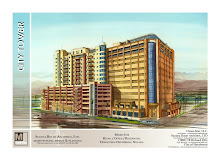
Coming on board is a project that we have been working on, the "City Tower," which consists of offices, residential, and retail on the same lot, at the gateway to downtown Henderson. The RDA sought out this developer and approached him in a way that shocked many in Henderson. He had applied for a development that fell in-line to the RDA/City’s vision for Water Street but was asked to go bigger and better. The RDA suggested that he develop a residential component to the development. Henderson had succeeded in providing people a place to be and was ready to start developing high-rise residential in conjunction with business and shopping in their downtown. As a result the residential component was approved with a lot of collaboration with the City, RDA, the developer and us.
The following may or may not apply, as the focus of this paper has morphed into something entirely different than I planned, and may change yet.
With the inclusion of Master-Plan Communities (Summerlin www.summerlin.com, The Lakes http://www.lasvegashomeagent.com/Lakes.html, Lake Las Vegas www.lakelasvegas.com, Anthem www.bartaustin.com/anthem/anthem-intro-index.html), people are living out their American dream of home ownership; however it’s a quarter-acre spot of land they value, perhaps their two-mile radius shopping centers or communities. What happens in downtown Las Vegas is not on their priority list. Moving people into the city at an alarming rate of 5,000 per month, is there or can there be a sense of ownership for where you reside or is Home still where you grew up?
With people moving away from the center of the valley, those areas become dilapidated, crime becomes more prevalent, and home values plummet… is this because the Las Vegas area has room to expand toward the outskirts of town? People would rather build new and run from the problems of the dying middle?
This emerging trend of living in the outskirts of the outskirts has created a cross-traffic congestion where people live on one side of the valley yet work on the other. Will this trend cause corporate businesses to want to relocate to the outskirts as well?
"Just five to 10 years ago, you heard all the time that this was a middle-class working town where you could ... work hard and afford a house close to your work," says Robert Parker, an urbanist at the University of Nevada, Las Vegas. "That's not true anymore. The frontier is moving further and further out to where a normal worker has to drive two hours just to find an affordable home." http://www.usatoday.com/travel/destinations/2005-04-27-vegas_x.htm
Homes are not more affordable toward the outskirts, but they are more desirable (i.e. new, better amenities, nicer parks, lower crime rates, gated communities, etc.) When these new communities are constructed, shopping centers, restaurants, etc., are farther away. Infrastructure takes time to catch up.
Water
o Water construction sites to keep dust down, but water restrictions. Assess needs of water based on air quality?
o Water shortage, usage restrictions.
o 90% comes from Colorado River- in a drought
Infrastructure
o Constant Construction
Constant construction spread across the valley spreads resources thin. Trying to provide infrastructure to multiple sites across the valley at the same time and in a timely manner is impossible within the current state.
Many sites without utilities
o Constantly playing catch-up
o Takes months for gas & power to get to sites
Transportation
RTC is a start, however
Due to urban sprawl and weather climate, the Las Vegas Valley is primarily personal vehicular society with little or no attention given to an efficient transit solution for locals. Currently, the C.A.T. Bus system "carries over 50 million passengers annually," approximately 10% of the valley’s population per day, but the bus stops and clientele are often tourists and/or "undesirables." This type of service greatly differs from counterparts in other cities across the country whose transit systems are used as an everyday form of transportation for businessmen, scholars, families, and students.
Car society. Lots of traffic
o Rail system? Monorail to airport will help, but needs to branch out away from the strip
o Access to transportation hubs?
o Too hot!
Construction Methods
o Now: get it built quick, fix it later.
A few years ago, a whole residential development was built without weep screeds (http://www.donohueteam.com/suncity/Weep%20Screeds/Weep%20Screeds%20in%20Sun%20City%20Summerlin.htm). The inspectors didn’t even catch it. Thousands of dollars in litigation and repair later, not to mention potential health issues of people living in the homes, the result is an illustration of the danger in building with the speed that is followed in the Las Vegas Valley.
Fast construction + low budget = poor construction.
Possible solutions
Active involvement
· Unified, educated voice to influence, inform policy and city fathers
· Resources for research, finances, advocacy
AIA Nevada
www.aianevada.org
History:
In 1939 architects who were already practicing in Reno and Las Vegas formed the Nevada State Association of Architects. This group recognized the growing need for a regulatory body and their sole stated purpose was "establishing laws to protect the profession and raise the standard of architecture in Nevada."
AIA Nevada Mission Statement To unite the AIA membership in the State of Nevada in fellowship; To lead legislative efforts for AIA Architects in the State of Nevada; To engage the public with a unified voice for AIA Architects in the State of Nevada; To ensure the health, safety and welfare of the public is protected through legislative efforts; To recognize excellence in design and service to the profession and the community.
AIA Nevada appears to be moving toward the original mission statement by this month holding a day-long strategic planning session to determine a 5-year plan. With recent growth over the last 12 years, programs and services have also increased. AIA Nevada is also looking into bringing a nationally-renowned associate management specialist to help facilitate this session. The results of this session will be announced at the March membership meeting.
Professional Collaboration
o Two heads are better than one, most simply
o Share ideas and previous experience to better the profession. Not re-inventing the wheel. Build on other people’s knowledge and experience.
§ Other professions:
· Medical: SHARE new discoveries, techniques, etc.
· Education: SHARE same, ENCOURAGE to "steal" materials/tactics
· Legal: Billing standards
· Science: SHARE theories/results to evaluate, criticize, "prove"
http://www.utexas.edu/courses/streeter/fl1999ehrd690/overheads/oh6.html:
Intraprofessional collaboration vs. interprofessional collaboration
Intraprofessional collaboration among colleagues who share a common professional education, values, socialization, identity, and experience.
Interprofessional collaboration between professionals who may not share a common professional education, values, socialization, identity, and experience.
OTHER THOUGHTS: The rules don’t apply
The ability of Las Vegas to sell itself as a destination where the norms and rules of daily life are thrown out the window, continues to be the city's biggest draw. "Vegas has managed to learn how to make itself be all things to all people," says historian Rothman. "If you are into country music, there is a niche for you here, or if you are into NASCAR there is a niche, or if you are a billionaire or drive a Chevette or Yugo, there is a place for you." http://www.usatoday.com/travel/destinations/2005-04-27-vegas_x.htm
2.17.2007
History/Theory paper

1.23.2007
History/Theory - Week 3 .... 4
(some of the major points from the Thursday assignment)
Why Help?
- I am looking at a exploring the possibility of introducing a homeless "city" into Las Vegas
- How can I look at the model of this homeless city in Portland, OR. and implement the principles and goals of their community into Las Vegas, NV?
- A place with rules without the social mandates of the city homeless shelters?
- Provide a sense of belonging... a fresh introduction back into the main stream "society". A sort of "halfway" house/place for the "bums", "vagrants", "undesirables", etc...
- implement the Portland model into the Vegas Valley
- re"architect" the components that I see as "Hurdles" in the process of assisting a process for a communal distortion of "RECIPROCITY"
FORESEEN ISSUES:
- Location
- Value
- Participation
- Favor/support/interest
- Education
- City ordinances
Karrick wrote:
- Overarching goal is the Architect not only as designer, but a mediator of social differences
- What makes "undesirable"? What makes transitional? What is the root problem? Many studies have been done on the homeless (in) D.C. in the late 70's? bought homeless people bus tickets to anywhere they wanted to go. Can a shanty town be desirable? What other buildings house the homeless. Search Single residential Occupancy (SRO) - Chicago, Columbus. The commons at grant.
Anne wrote:
- How could you (I) involve others like you (me) in the process? You could even improve on the model in Portland by involving the community as a whole: fundraising and volunteering. It would be key to get businesses, educators, etc on board. Can you (I) teach those who want to learn? Yes. Can people who want to work, work? Yes. How could you (I) convince others to take a chance on these people's future? How can you (I) began to educate people about the benefits of helping others.
How?
1.12.2007
Why We Buy or the handbook for successful profits
After reading most of the book, I look forward to the rest of it while on the plane ride into Boston. The examples Underhill offers as the first steps towards effective marketing are the what the majority of the shop owners lack. The insight to locate the displays with the consumer in mind, not just the how the display looks in the store before the doors are opened. Simple suggestions such as move the "Top Ten" list lower, put the display away from the counter as to not block it while customers are in line, and designate a "space" for the queue to start.
While at UNLV I had the opportunity to work in retail at a "Western Wear" store here in Vegas, which has paid off, I still get a great discount, haven't missed a year of the PBR, NFR and get some concerts tickets still.... anyways, I remember that when a new display came from corporate arrived, it was up to us to figure out where it should go. The goal was always to have it in the most "trafficked" (sp) space, which usually is always near the entrance/cash wraps. It never failed that the next day we were moving it to another location because it affected the way we and the customers navigated around it. These displays are sent to stores with the intent that it will provoke the customer to buy that product, instead they seem to be in the way or forgotten. Enclosed with the display are always instructions of how it is to go together but never how to make effective. I can imagine the thought process.... okay, now that we have it together.... where should it go.... Where is should go is the most important piece of information that it should come with. I would equate it this way... not knowing where best to put the display is like driving to a undisclosed location with hopes to finding it without any troubles.
This book should, if not already, be on the "must read" list of every shop owner/manager when opening/operating a store. Underhill describes very well things that everyone should pick up on(among the other not so obvious), instead someone is to busy with a ton of things on the "to do" list that the obvious is just forgotten or over looked.
1.06.2007
Thought provoked...
After reading all of the different posts, viewpoints and comments that either share the opinion or slightly disagree, I have come to these conclusions. I admit that this has been a fast and intense week of blogging and sharing thoughts, beliefs, perspectives and personal experiences that have truly molded everyone's views. I must admit that I have not always commented back on as many posts that I would have liked to, but I also know that I can quickly become a broken record.
Whatever the opinion may be regarding this essay, I will dare to say that like myself, we have all had an experience either personally or been a close witness to that has been brought to vivid memory. I will also mention that this is in my forethought. How can we, as young adults seeking to be part of the solution to these complex issues, implement “Design citizenship”, provide sustainable buildings, be budget conscience, etc.
(and yes, Tom, I will include you into this grouping, even though you are a experienced Architect seeking to improve your knowledge).
I have mentioned that I live in Vegas (Sin City), but prior to that I grew up in So. California, 60 miles East of Los Angeles. That put me in the middle of San Bernardino, and at that time it was known as the murder and welfare capitol. My childhood neighborhood was extremely "diverse." I didn't grow up in a gated community, then again gated communities were not the big thing. My brother and I and the neighborhood friends played football in the streets like, I sure, many of you all did. We felt very safe.
The first time I remember being "different", and this experience is somewhat similar to that of yours Herb, I was at a minor league baseball game (San Berdiano Spirits, yes I saw Griffey Jr. play before he was big) and was in the parking lot getting a glove or something. A foul ball came my way in the middle of the parking lot and I went for it. There were some others trying to get it, but I made it first and got the prize. That didn't last long as the other boys didn't like that to much and they proceeded to jump me (for those that are not familiar with that term, I was beat up by several people at one time). I guess, looking back at it now with this essay under my belt, I had crossed the "boundaries". The lesson I learned was this: when you find yourself in the wrong area at the wrong time, though it may not be your fault, you tend not to put yourself (especially when you grow up and have your own family) back into those situations. Yes I have heard of "driving while black" but I have also heard of "reverse-discrimination" and there is little talk about how to solve that.
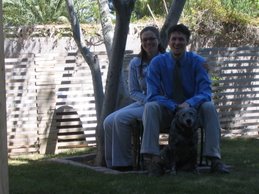
Back to Las Vegas... my wife and I live in a neighborhood that is extremely diverse, where we, as the "white, middle-class" family with one dog are the minority. We know our neighbors, we don't have them over every weekend for dinner and football, but we know them as much as we can while struggling with a language barrier. My neighbors don't feel intimidated by me being a white middle class man. In fact I don't think they really care to know me. Then again, I may be naive to the fact that I really am intimidating them by living next door to them and I just don't know it.
I agree with Bickford, that there is a need to be a better, as Herb put it, "design citizen." I am eager to see where this new insight will lead me.
The terms listed in Heb's previous post:
escape, or moving away from the stimulus (leaving a noisy room, for instance)
division, or erecting a barrier between us and the stimulus (closing a door, for instance)
withdrawl, or body language that indicates you don't want to be disturbed (not making eye contact in the elevator, a group of friends in a close circle that disinvites others from entering, etc.)
anonymity, or going to a place where information flow doesn't matter because people don't know who you are and so the information isn't really linked to a person (every small-town gay kid who grew up and moved to a big city knows about this one)
These are all mental as well as physical items. The journey to resolve the issues will be, as many have already stated, education of not just Architects but City Planners, Developers, Contractors and Investors.
I can expect that, if nothing else, I will be more sensitive to the everyday people that will be part of my future "built environments." The part I am not looking forward to is the "beat down" that is always part of the job when dealing with the all important factor for the owners, developers and city planners: MONEY. That sadly is the reality in which I work.
And now, after 10 hours on the computer today, my wife is strongly suggesting that I close up shop. :)
1.03.2007
After finishing the entire Essay
Continuing on my last thought...
I said, "I really take offense that there is suggestion, strong suggestion that Architecture (the built environment) is to blame for the in-opportunities, inequality, homeless, etc..." Though I hear the comment that, "What design does is makes some actions easier and more likely and others more difficult," but where is the individual responsibility? Yes I agree that certain "built environments" are more conducive to various behaviors and perceived notions about the people that occupy those spaces. However, the behaviors/actions that were discussed in the essay can take place in almost all areas, whether it be in the Ghetto or in gated communities.
The idea that policing an area could make certain people "feel distinctly unwelcome" is odd to me. Stealing the words of the great Colin Cowherd, "that is a you problem." On the flip side of that, I agree that it is not for me or anyone else to say when someone can feel fear or be uncomfortable. But let it be clear that these are real feelings and are on both sides of the proverbial "gate."
Which is why, I guess, that families move into the gated communities with these grand illusions that this is the promised land of bliss and comfort. I have less then little compassion to those who buy into the CC&R communities and then later decide to fight their way out of a contract. Although I agree most of the power within the CC&R boards is overstated and seemingly out of control, but keep in mind it is known at the time of purchase what the rules are. Paul Garland said it best, "....and it drove me crazy. I know live 35 minutes away from downtown on a 10 acre horse farm, and yes I have a trampoline in the backyard visible from the street." Well said, well said.

Picture of greatest example of
Urban Sprawl in Las Vegas, NV
Instead of crying about fairness, freedom, the lack of privacy and the denial of diversity, make a change. Play by the rules or get out.
Boundaries are inevitable, whether planned or just hap-chance. People groups enjoy boundaries and expect them. Boundaries in many ways define people, they can be geographical, physical, mental, etc., but they still define people. I feel the major problem with boundaries comes when boundaries are placed upon groups of people by other groups.
The architecture (built environments) and the real social effect on society is a concern and should be addressed in the style, feel, materials, and scale of spaces. How people move in and out, interact with "strangers" in either a residential or commercial node, and get from "A" to "B" should be well thought out and sensitive to all that will (and will want to) use those spaces. Small movements such as downtown revitalization, a better mixture of rooftops and retail pads, and affordable housing (not apartments) is the start. Side bar... why are apartments called apartments when they are all stuck together?.. anyways....
This subject, now that it is in the forefront of all of our thoughts, can really shape the feel, experience and style of our intensive studio project.
the readings....
Just after I went and made new friends...
The new days begin. I got up a litter earlier today than normal to start the readings from 'Blackboard' site and found that I will most likely still get to work about 8:30. The reading, Bickford, Susan. 2000. "Constructing Inequality: City Spaces and the Architecture of Citizenship." Political Theory 28:3, 355-376. )is a good read so far. I have made it half way through and cannot wait to finish it up during lunch today.
So-far this "Political Theory" is just that. I really take offense that there is suggestion, strong suggestion that Architecture (the built environment) is to blame for the in-opportunities, inequality, homeless, etc. I can and will get into this a little more, later tonight.
I would like to add this for thought until my next post.
Do not all persons, irregardless of race, religion, political persuasion, economical status have the same root? Each person is born into this world able and eventually capable to make decisions that ultimately pave the path to their future. How can it be that a "safe" environment for one "group" can not be the same "safe" environment for another?